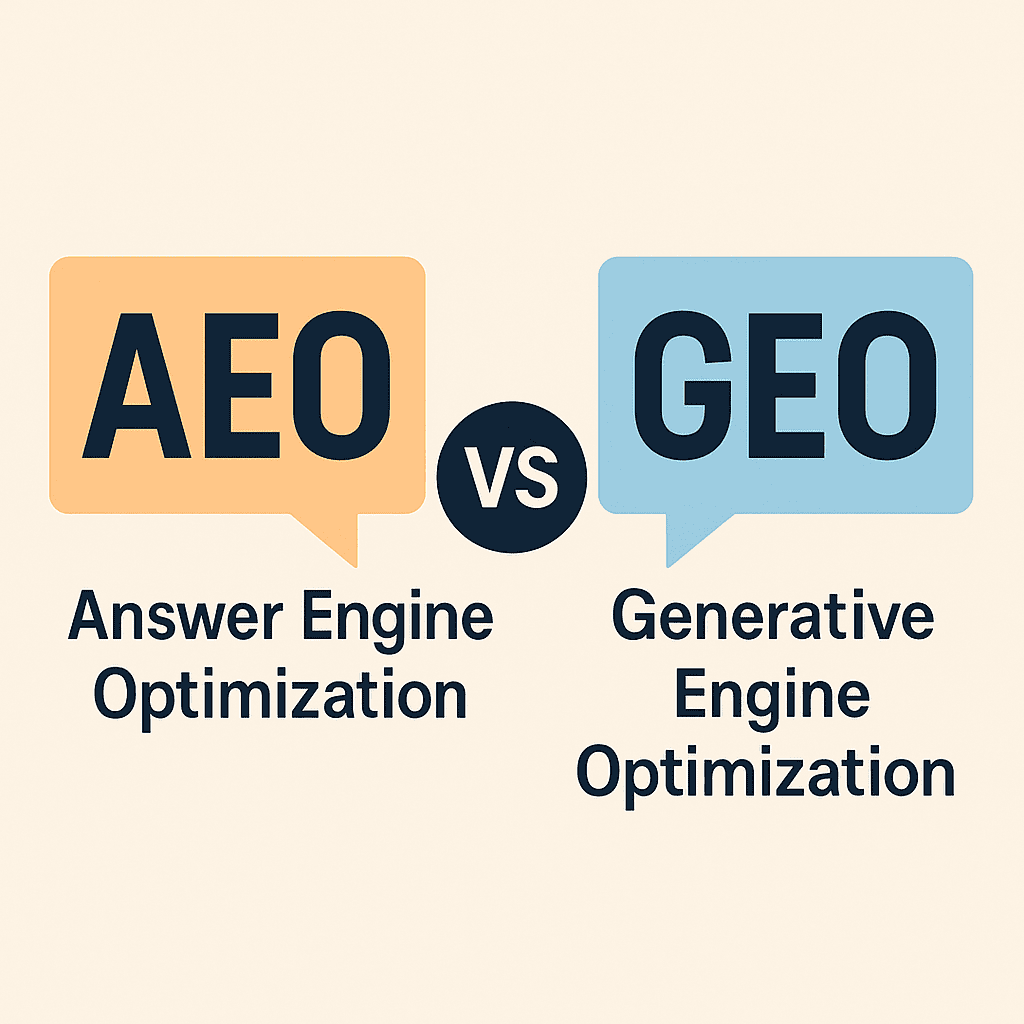
GEO vs AEO — if you’ve been following SEO closely, you’ve seen both terms appearing everywhere. They sound like they could be the same thing. They’re not, and confusing the two is one of the most common mistakes marketers are making right now. Understanding the distinction between Generative Engine Optimisation (GEO) and Answer Engine Optimisation (AEO) is quickly becoming essential for any business that wants to stay visible in an AI-driven search environment.
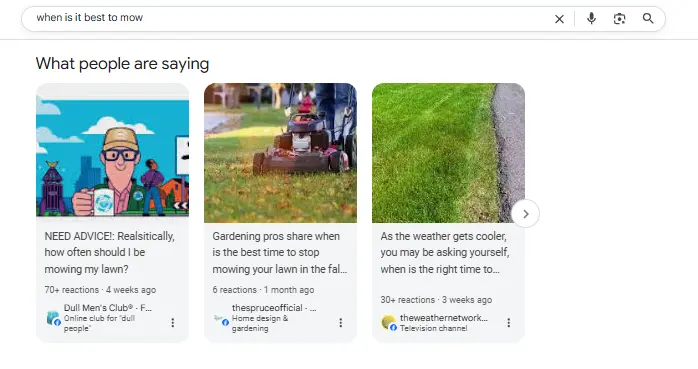
AEO helps your content appear as a direct, structured answer in search results — think featured snippets, People Also Ask boxes, and voice assistant responses. GEO, on the other hand, is built for AI-powered results like Google’s AI Overviews and ChatGPT. It positions your content to be the trusted source that AI models summarise, cite, and serve to users. This post breaks down exactly how GEO vs AEO differ, when to use each strategy, and how to combine both for maximum visibility.
What is AEO (Answer Engine Optimisation)?
Answer Engine Optimisation is a content strategy designed to help your pages appear as direct answers within search engine results pages. As search engines have shifted from simply listing links to actively answering questions, AEO has become the discipline that keeps your content aligned with that change.
AEO works by making it easy for search engines to extract, interpret, and display your content in answer-focused formats. The core tactics include:
- Writing content around specific, searchable questions that users are already asking
- Using headers that mirror the natural phrasing of real search queries
- Following each question with a short, precise answer — typically two to four sentences
- Implementing schema markup such as FAQ or HowTo to signal your content’s structure to search engines
AEO is particularly powerful for businesses answering high-intent queries — questions like “how much does X cost” or “what is the best Y for Z.” When done well, it gives your site a chance to appear before competitors even receive a click, placing you directly in front of the user at the exact moment they need an answer.
What is GEO (Generative Engine Optimisation)?
Generative Engine Optimisation addresses how your content performs within AI-powered search experiences. Rather than pulling a single featured snippet, tools like Google’s AI Overviews, Bing’s Copilot, and ChatGPT synthesise information from multiple sources — often without sending a single click to any of them. GEO positions your content to be one of those trusted sources.
With GEO, the goal is not just to rank — it is to become the source that AI models cite, summarise, and build from. The content signals that matter most for GEO are:
- Longform, substantive content that addresses complex topics thoroughly and completely
- Demonstrated expertise through author bios, credentials, and original insights
- Fresh data, reputable citations, and regularly updated content that AI models trust
- Clear, logical formatting that is easy for machines to parse while still being genuinely useful to human readers
As AI-generated search results become the standard rather than the exception, GEO is what keeps your business visible even when there are no traditional snippets or blue links in sight. According to Search Engine Journal, AI Overviews now appear in a significant proportion of search results, making GEO an increasingly non-negotiable part of any content strategy.
GEO vs AEO: The Core Differences Explained
While GEO and AEO are both modern extensions of SEO strategy, they serve fundamentally different purposes. One helps you show up as an answer. The other helps you become the source. Here is a direct breakdown:
AEO is best suited for:
- Appearing in featured snippets, answer boxes, and People Also Ask results
- Answering short, direct questions using structured, scannable content
- Targeting high-intent keywords such as product comparisons and service pricing queries
- Improving visibility in traditional, non-AI search results
GEO is best suited for:
- Being cited and summarised in Google’s AI Overviews or Bing’s Copilot
- Publishing in-depth guides and evergreen content that demonstrates genuine expertise
- Building long-term authority on topics where depth and multiple perspectives add value
- Maintaining visibility as search continues shifting toward generative AI-driven answers
You do not need to choose one over the other. AEO captures high-visibility placements quickly for short-form, question-based content. GEO builds the kind of lasting trust and authority that keeps your business relevant as search evolves. The most effective strategies in 2025 and beyond use both, deployed strategically depending on content type and business goal.


When Should You Prioritise AEO vs GEO?
The choice between AEO and GEO comes down to the type of content you are creating and the outcome you are optimising for.
Prioritise AEO when you want quick visibility for specific, question-based queries. It works particularly well for:
- Service businesses targeting local search intent
- Product comparisons or cost-related questions with clear, definable answers
- Short-form content formats such as FAQs and support documentation
Prioritise GEO when you are building authority or competing on informational depth. It is the stronger approach for:
- Longform guides and evergreen content that covers a topic comprehensively
- Thought leadership pieces and expert breakdowns that require nuanced explanation
- Topics that genuinely benefit from original data, multiple perspectives, or in-depth analysis
Most businesses will benefit from a mix of both. AEO captures search features quickly. GEO builds the lasting trust and relevance that keeps you visible as the search landscape continues to change. Think of them as complementary tools, not competing choices.
How to Optimise Your Content for AEO
Succeeding with answer engine optimisation means structuring your content the way search engines expect it to be structured. Here is where to begin:
- Write your headers as clear, direct questions that mirror how real users search
- Follow each question immediately with a concise, to-the-point answer of two to four sentences
- Use bullet points, numbered lists, or short paragraphs to improve scanability for both humans and machines
- Implement schema markup such as FAQ or HowTo to help search engines classify your content’s format
- Target keywords that already trigger featured snippets or People Also Ask results; these are your fastest routes to AEO visibility
This type of content performs best when it delivers a fast, genuinely helpful answer and signals to search engines that it is ready for use in rich result formats. If you are not sure where to start, identify keywords in your niche that already show rich results in Google; these represent your clearest AEO opportunities.
How to Optimise Your Content for GEO
Generative engine optimisation requires going beyond surface-level advice and creating content that AI systems can genuinely trust, cite, and learn from. The focus is on depth, credibility, and demonstrable expertise. Here is what to prioritise:
- Write longer, more in-depth content that addresses the full context of a topic rather than skimming the surface
- Incorporate original insights, proprietary data, or unique perspectives that cannot be found elsewhere
- Include clear, credible author bios that reflect genuine subject matter expertise
- Add reputable outbound links to authoritative sources that support your claims — AI models value well-sourced content
- Keep your content updated regularly and display a visible “last modified” date so AI systems know your information is current
AI-powered search features consistently favour sources that demonstrate real experience and authority. Content written for actual people, backed by genuine expertise, is far more likely to be summarised and cited than content that reads as though it was written for an algorithm. As Google’s own Search Quality Evaluator Guidelines make clear, E-E-A-T (Experience, Expertise, Authority, and Trust) is central to how AI-influenced results are evaluated.
Common Mistakes When Implementing GEO and AEO
Many businesses fall into the same traps when they start applying these strategies. Here is what to watch out for.
Treating GEO and AEO as mutually exclusive. You do not pick one and ignore the other. Your FAQ page needs AEO. Your comprehensive guide needs GEO. Most content strategies benefit from applying both, in the right places.
Optimising for machines at the expense of real readers. If your content reads like it was written for an algorithm rather than a person, you have gone too far. AI models favour content that genuinely serves human readers, even as they also look for the technical elements that help machines understand it.
Ignoring content freshness. This is particularly damaging for GEO. AI systems prioritise current, accurate information. A comprehensive guide that has not been updated in two years is unlikely to be cited as a trusted source, regardless of how well it was originally written.
Skipping schema markup for AEO. Schema markup is the difference between hoping for a featured snippet and actively signalling your eligibility for one. It takes minutes to implement and consistently improves AEO performance.
Not measuring GEO and AEO results separately. You need to know which strategy is driving which outcomes. Track featured snippet appearances and People Also Ask visibility for AEO content. Monitor AI Overview citations, unlinked brand mentions, and referral traffic from AI tools for your GEO content. Without separate tracking, you are operating blind.
Frequently Asked Questions: GEO vs AEO
What is the difference between GEO and AEO?
AEO focuses on structuring content to appear as direct answers in search results, such as featured snippets and People Also Ask boxes. GEO focuses on creating trustworthy, in-depth content that AI-powered tools like Google’s AI Overviews can summarise and cite. AEO targets quick, high-intent moments; GEO builds long-term authority and AI visibility.
Is AEO just another name for SEO?
No. AEO is a specific subset of SEO that targets how search engines deliver direct answers, particularly for short-form, question-based content. It works alongside traditional SEO and content optimisation, not as a replacement for them.
How is GEO changing SEO strategies?
GEO is shifting the focus from simply ranking on page one to becoming a trusted source within AI-generated summaries. It requires marketers to prioritise quality, authority, and freshness over traditional keyword optimisation. As generative AI becomes central to how search results are produced, GEO is becoming as important as technical SEO.
Do I need to implement both GEO and AEO?
For most businesses, yes. AEO wins you fast visibility in high-intent search moments. GEO earns you long-term presence in AI-generated results. The right balance depends on your content mix and business goals, but a strategy that incorporates both will outperform one that relies on either alone.
Conclusion: GEO vs AEO Both Matter — Here’s How to Use Them Together
GEO vs AEO is not a debate about which strategy is better — it is a question of how to use both intelligently. AEO helps you win visibility in high-intent, answer-focused moments. GEO positions your content to be referenced, cited, and repurposed by the AI tools that are reshaping how search results are generated and consumed.
The businesses winning at search in 2025 are the ones that target quick wins through AEO while simultaneously building long-term authority through GEO. As search continues to evolve, your content strategy needs to evolve with it: helpful, credible, and built to perform whether a human or an algorithm is evaluating it.
Let WEBSIGH Optimize Your Local SEO
At WEBSIGH, we help businesses build content strategies that are optimised for both GEO and AEO — so you stay visible now and as AI-driven search continues to grow. Get in touch with our team to find out how we can help you build a strategy that works across both.
📧 Email: info@websigh.com
📞 Phone: +91 (700) 880-7871
🔗 Free AEO & GEO Audit: Fill the form below, and we will get back to you.
Recommended Reading & Sources
- Google Search Quality Evaluator Guidelines — static.googleusercontent.com (E-E-A-T framework)
- Google’s Structured Data Documentation — developers.google.com/search/docs/appearance/structured-data
- Search Engine Journal — AI Overviews Coverage — searchenginejournal.com
- Moz — Featured Snippets Guide — moz.com/learn/seo/featured-snippets
- Schema.org FAQ Schema Reference — schema.org/FAQPage
The technology that we use to support you
Ready to reduce your technology cost?

See More Blogs



Let's Make Something Impactful
Call us at: 700-880-7871
- Client-oriented
- Independent
- Competent
- Results-driven
- Problem-solving
- Transparent